Tips for Writing Healthy Romantic Relationships

sandydragon1:

  • Don’t base them exclusively on physical and/or sexual attraction. While these kinds of attraction can certainly strengthen relationships, they can’t create anything but a weak foundation for a relationship on their own.
  • Know how your characters like to show and be shown affection. Not everyone shows their interest in others the same way. Some people like to give gifts. Others like to cuddle. Still others like giving compliments. Different people like to receive different kinds of affection as well. 
  • Remember that love at first sight is a myth. You can have lust at first sight and romantic interest at first sight, but true love takes time to develop.
  • Show the characters interacting and getting to know each other. This should be obvious, but it is all to common for a character to be given a love interest at the last minute or to be paired off with someone the reader hasn’t seen them interact with much. Remember, the reader doesn’t have to see every little thing they do together, but the relationship will feel forced to the reader if they don’t see the characters interacting and establishing that they genuinely care about each other in a significant way. If the reader views your character’s significant other as little more than a stranger, then you’re doing something wrong.
  • Have both characters do things for each other and contribute to the relationship in meaningful ways. Relationships are two way streets. While you don’t need to keep score of exactly who does what for who (Relationships are not a competitive sport!), the relationship should seem fairly balanced or, if it’s not, then the characters should be working to change that.
  • Don’t give your characters completely incompatible traits. While it’s healthy for people to differ from each other, there are some differences that even people that are otherwise perfect for each other probably can’t overcome. For example, a environmental activist would have a hard time having a healthy relationship with someone who wants to chop dow a forest. Basically, know your characters’ deal breakers so that you won’t try to match up characters who are simply incompatible with each other.
  • Have them share interests. This is a great way to add substance to relationships outside of physical attraction and compatible personalities. Maybe they both like fishing. Maybe they share a passion for baking. Whatever you decide to have them like, don’t be afraid to use your characters’ shared interests as opportunities for them to bond. Also, if your characters don’t share a lot of interests/hobbies, consider having one character introduce the other to their hobby or have one character take initiative to try something the other likes. This is a great way to show how much your characters care about each other because it demonstrates your characters’ genuine interest in what makes their partner happy. 
  • Let the relationship experience at least a few bumps in the road. No relationships are perfect. Let your characters disagree, argue, and maybe even have a full on fight. Relationships that withstand obstacles seem stronger to readers, especially if the characters grow as people because of these hardships. 

HEY ARTISTS!

girlwiththegreenhat:

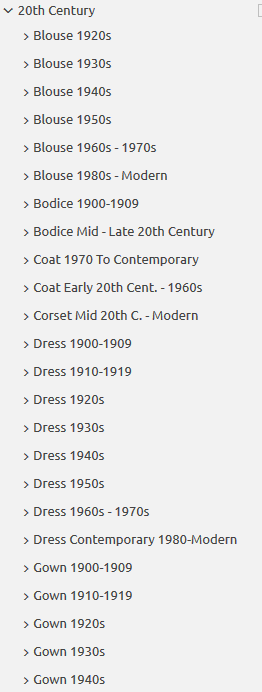
Do you design a lot of characters living in not-modern eras and you’re tired of combing through google for the perfect outfit references? Well I got good news for you kiddo, this website has you covered! Originally @modmad made a post about it, but her link stopped working and I managed to fix it, so here’s a new post. Basically, this is a costume rental website for plays and stage shows and what not, they have outfits for several different decades from medieval to the 1980s. LOOK AT THIS SELECTION:

OPEN ANY CATEGORY AND OH LORDY–

There’s a lot of really specific stuff in here, I design a lot of 1930s characters for my ask blog and with more chapters on the way for the game it belongs to I’m gonna be designing more, and this website is going to be an invaluable reference. I hope this can be useful to my other fellow artists as well! 🙂

blackinkedfeather:

uncannycookie:

sonicsarah1117:

straightasdeanwinchester:

viiviirs:

some fucking resources for all ur writing fuckin needs

REBLOG TO SAVE A WRITER

@uncannycookie I saw this and thought of you, I hope this helps!

You taunt me with broken links, you fiend. I shall cry forever now, dreaming of what could have been… T-T

@uncannycookie​ Tried fixing these. Hope they work now again

If it still not works then deleting “http://t.umblr.com/redirect?z=http%3A%2F%2F“ in front of the page’s actual URL, replacing every 2%F with a slash, and (at the end of the URL) deleting “&t=“ including the string of numbers/letters/signs that follow after that should do the trick.

Resources For Writing Sketchy Topics

ironwoman359:

wordsnstuff:

Medicine

Writing Specific Characters

Illegal Activity

Black Market Prices & Profits

Forensics

Bless

Tips to learn a new language

darasteine:

The 75 most common words make up 40% of occurrences
The 200 most common words make up 50% of occurrences
The 524 most common words make up 60% of occurrences
The 1257 most common words make up 70% of occurrences
The 2925 most common words make up 80% of occurrences
The 7444 most common words make up 90% of occurrences
The 13374 most common words make up 95% of occurrences
The 25508 most common words make up 99% of occurrences

(Source: 5 Steps to Speak a New Language by Hung Quang Pham)

This article has an excellent summary on how to rapidly learn a new language within 90 days.

We can begin with studying the first 600 words. Of course chucking is an effective way to memorize words readily. Here’s a list to translate into the language you desire to learn that Derek Roger suggested! 🙂

EXPRESSIONS OF POLITENESS (about 50 expressions)
     

  • ‘Yes’ and ‘no’: yes, no, absolutely, no way, exactly.
       
  • Question words: when? where? how? how much? how many? why? what? who? which? whose?
       
  • Apologizing: excuse me, sorry to interrupt, well now, I’m afraid so, I’m afraid not.
       
  • Meeting and parting: good morning, good afternoon, good evening, hello, goodbye, cheers, see you later, pleased to meet you, nice to have met.
       
  • Interjections: please, thank you, don’t mention it, sorry, it’ll be done, I agree, congratulations, thank heavens, nonsense.
       

NOUNS (about 120 words)

  • Time: morning, afternoon, evening, night; Sunday, Monday,
    Tuesday, Wednesday, Thursday, Friday, Saturday; spring, summer, autumn,
    winter; time, occasion, minute, half-hour, hour, day, week, month,
    year.
       
  • People: family, relative, mother, father, son,
    daughter, sister, brother, husband, wife; colleague, friend, boyfriend,
    girlfriend; people, person, human being, man, woman, lady, gentleman,
    boy, girl, child.
       
  • Objects: address, bag, book, car, clothes, key,
    letter (=to post), light (=lamp), money, name, newspaper, pen, pencil,
    picture, suitcase, thing, ticket.
       
  • Places: place, world, country, town, street, road,
    school, shop, house, apartment, room, ground; Britain, name of the
    foreign country, British town-names, foreign town-names.
       
  • Abstract: accident, beginning, change, color,
    damage, fun, half, help, joke, journey, language, English, name of the
    foreign language, letter (of alphabet), life, love, mistake, news, page,
    pain, part, question, reason, sort, surprise, way (=method), weather,
    work.
       
  • Other: hand, foot, head, eye, mouth, voice; the
    left, the right; the top, the bottom, the side; air, water, sun, bread,
    food, paper, noise.
       

PREPOSITIONS (about 40 words)
   

  • General: of, to, at, for, from, in, on.
       
  • Logical: about, according-to, except, like, against, with, without, by, despite, instead of.
       
  • Space: into, out of, outside, towards, away from,
    behind, in front of, beside, next to, between, above, on top of, below,
    under, underneath, near to, a long way from, through.
       
  • Time: after, ago, before, during, since, until.
       

DETERMINERS (about 80 words)
 

  • Articles and numbers: a, the; nos. 0–20; nos. 30–100; nos. 200–1000; last, next, 1st–12th.
       
  • Demonstrative: this, that.
       
  • Possessive: my, your, his, her, its, our, their.
       
  • Quantifiers: all, some, no, any, many, much, more, less, a few, several, whole, a little, a lot of.
       
  • Comparators: both, neither, each, every, other, another, same, different, such.
       

ADJECTIVES (about 80 words)
   

  • Color: black, blue, green, red, white, yellow.
       
  • Evaluative: bad, good, terrible; important, urgent, necessary; possible, impossible; right, wrong, true.
       
  • General: big, little, small, heavy; high, low; hot,
    cold, warm; easy, difficult; cheap, expensive; clean, dirty; beautiful,
    funny (=comical), funny (=odd), usual, common (=shared), nice, pretty,
    wonderful; boring, interesting, dangerous, safe; short, tall, long; new,
    old; calm, clear, dry; fast, slow; finished, free, full, light (=not
    dark), open, quiet, ready, strong.
       
  • Personal: afraid, alone, angry, certain, cheerful,
    dead, famous, glad, happy, ill, kind, married, pleased, sorry, stupid,
    surprised, tired, well, worried, young.
       

VERBS (about 100 words)
   

  • arrive, ask, be, be able to, become, begin, believe, borrow,
    bring, buy, can, change, check, collect, come, continue, cry, do, drop,
    eat, fall, feel, find, finish, forget, give, going to, have, have to,
    hear, help, hold, hope, hurt (oneself), hurt (someone else), keep, know,
    laugh, learn, leave, lend, let (=allow), lie down, like, listen, live
    (=be alive), live (=reside), look (at), look for, lose, love, make, may
    (=permission), may (=possibility), mean, meet, must, need, obtain, open,
    ought to, pay, play, put, read, remember, say, see, sell, send, should,
    show, shut, sing, sleep, speak, stand, stay, stop, suggest, take, talk,
    teach, think, travel, try, understand, use, used to, wait for, walk,
    want, watch, will, work (=operate), work (=toil), worry, would, write.
       

PRONOUNS (about 40 words)

  • Personal: I, you, he, she, it, we, they, one; myself, yourself, himself, herself, itself, ourselves, yourselves, themselves.
       
  • Possessive: mine, yours, his, hers, its, ours, theirs.
       
  • Demonstrative: this, that.
       
  • Universal: everyone, everybody, everything, each, both, all, one, another.
  • Indefinite: someone, somebody, something, some, a few, a little, more, less; anyone, anybody, anything, any, either, much, many.
       
  • Negative: no-one, nobody, nothing, none, neither.
       

ADVERBS (about 60 words)

  • Place: here, there, above, over, below, in front, behind,
    nearby, a long way away, inside, outside, to the right, to the left,
    somewhere, anywhere, everywhere, nowhere, home, upstairs, downstairs.
       
  • Time: now, soon, immediately, quickly, finally,
    again, once, for a long time, today, generally, sometimes, always,
    often, before, after, early, late, never, not yet, still, already, then
    (=at that time), then (=next), yesterday, tomorrow, tonight.
       
  • Quantifiers: a little, about (=approximately), almost, at least, completely, very, enough, exactly, just, not, too much, more, less.
       
  • Manner: also, especially, gradually, of course,
    only, otherwise, perhaps, probably, quite, so, then (=therefore), too
    (=also), unfortunately, very much, well.
       

CONJUNCTIONS (about 30 words)

  • Coordinating: and, but, or; as, than, like.
       
  • Time & Place: when, while, before, after, since (=time), until; where.

       
  • Manner & Logic: how, why, because, since (=because), although, if; what, who, whom, whose, which, that.
      

Latin phrases to use as incantations.

mothmaam:

This is gonna be a long list.

  • ab intra – from within
  • ab origine – from the source
  • absit iniuria – “let insult be absent”
  • absit invidia – “let envy be absent”

  • absit omen – “let omens be absent”

  • ab uno disce omnes – from one, learn all.

  • abyssus abyssum invocat – deep calleth unto deep

  • a capite ad calcem – from head to heel

  • acta non verba – actions not words

  • ad altiora tendo – “I strive to higher things”

  • ad astra – to the stars
  • ad fontes – to the sources

  • ad meliora – towards better things

  • ad oculos – to the eyes

  • ad undas – to the waves

  • ad victoriam – to victory

  • adsum – I am here

  • a fortiori – from the stronger/from strength

  • a mari usque ad mare – from sea to sea

  • audeamus – let us dare

  • audentes fortuna iuvat – fortune favors the bold

  • audi, vide, tace – hear, see, be silent

  • beatae memoriae – of blessed memory

  • bona fide – in good faith

  • bono malum superate – overcome evil with good

  • capax infiniti – holding the infinite

  • carpe diem – seize the day

  • carpe noctem – seize the night

  • cave – beware

  • ceteris paribus – all other things being equal

  • circa – around
  • citius, altius, fortius – faster, higher, stronger

  • clavis aurea – golden key

  • cogito ergo sum – I think, therefor I am

  • compos mentis – in control of the mind

  • concilio et labore – by wisdom and effort

  • concordia cum veritate – in harmony with truth

  • concordia salus – well-being through harmony

  • coniunctis viribus – with connected strength

  • consummatum est – it is complete

  • corruptus in extremis – corrupt to the extreme

  • crescit eundo – it grows as it goes

  • de novo – from the new
  • de profundis – from the depths

  • dies irae – day of wrath
  • dona nobis pacem – give us peace

  • ego te provoco – I challenge you

  • esse est percipi – to be is to be perceived  

  • esse quam videri – to be, rather than to seem

  • esto quod es – be what you are

  • ex animo – from the soul

  • ex luna scientia – from the moon, knowledge

  • ex scientia tridens – from knowledge, sea power

  • ex silentio – from silence

  • ex undis – from the waves of the sea

  • experientia docet – experience teaches

  • fac et spera – do and hope

  • fac fortia et patere – do brave deed and endure

  • faciam quodlibet quod necesse est – I’ll do whatever it takes

  • faciam ut mei memineris – I’ll make you remember me

  • facta, non verba – deeds, not words

  • fortis et liber – strong and free

  • fortis in arduis – strong in difficulties

  • gloriosus et liber – glorious and free

  • hic abundant leones – here lions abound

  • hic et nunc – here and now

  • hic sunt dracones – here there are dragons

  • hinc illae lacrimae – hence those tears

  • hinc itur ad astra – from here the way leads to the stars

  • igni ferroque – with fire and iron

  • in memoriam – into the memory

  • in nocte consilium – advice comes over night

  • libra – balance
  • littera scripta manet – the written words endure

  • locus standi – a right to stand

  • luceo non uro – I shine, not burn

  • luctor et emergo – I struggle and emerge

  • mare liberum – free sea

  • memento vivere – remember to live

  • more ferarum – like beasts

  • natura non contristatur – nature is not saddened

  • nec spe, nec metu – without hope, without fear

  • noli me tangere – do not touch me

  • ophidia in herba – a snake in the grass

  • pro se – for oneself

  • propria manu – by one’s own hand

  • quaere – to seek

  • quod abundat non obstat – what is abundant does not hinder

  • resurgam – I shall arise

  • semper ad meliora – always towards better things

  • semper anticus – always forward

  • semper apertus – always open

  • semper fortis – always brave

  • semper liber – always free

  • stet – let it stand
  • tuebor – I will protect

  • vera causa – true cause